
Bookflix · Essay
This Is a Day I Imagined
Fragments of a reading of Caro Claire Burke’s Yesteryear. Loose pieces, just to have the flavour. The whole thing runs in the fall issue, September.
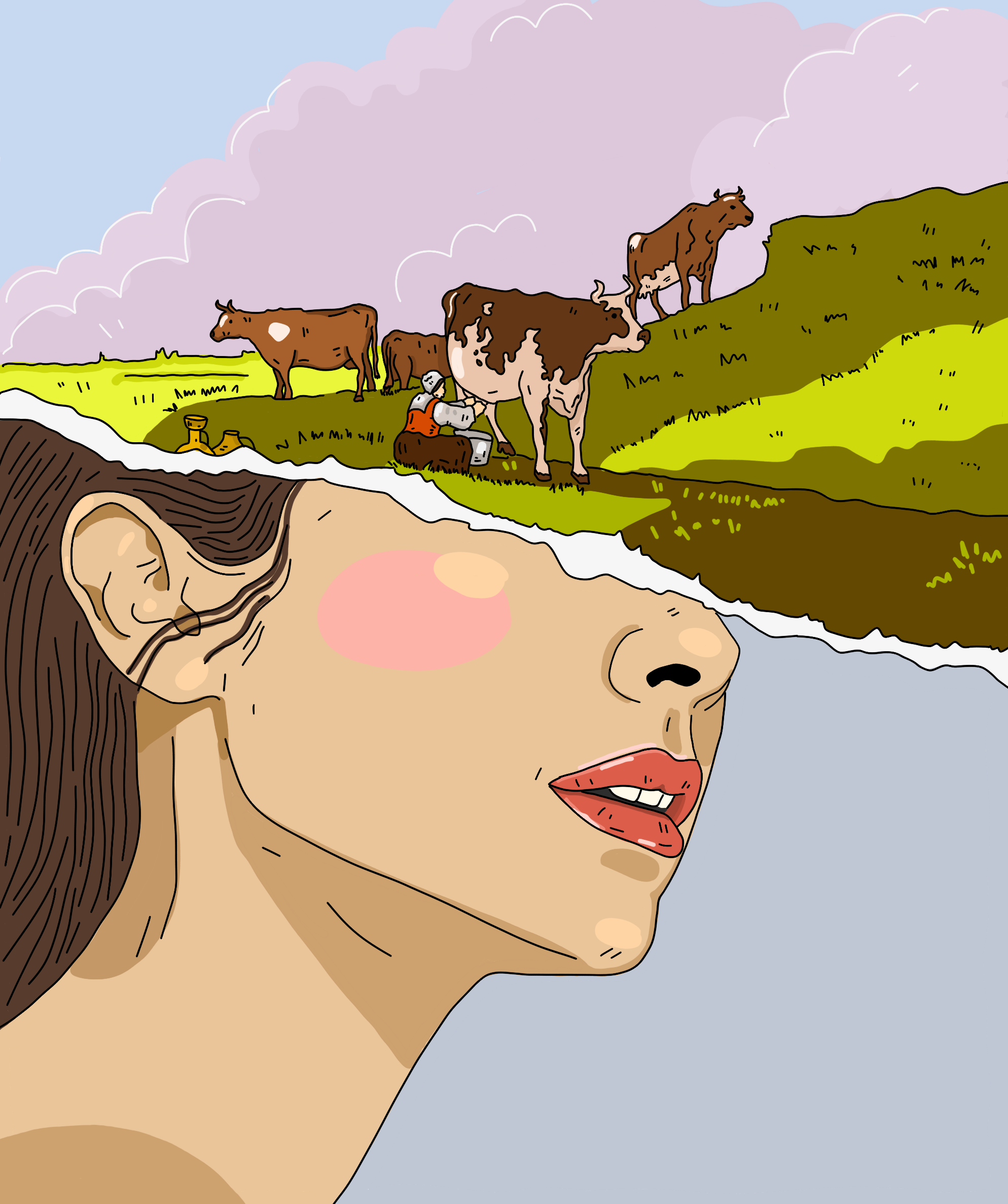
For everyone who left a review that begins, “Look, I get that it’s SATIRE, but…”
If that was your review — put the pitchfork down for a second. I’m not here to take satire away from you. I want to walk you somewhere a little stranger.
Because a book that was only tradwife-critique wouldn’t have bothered with a phantom pregnancy. Or with a dream of babies born without feet. Or with a pill after which nothing the narrator says can be trusted. Or with a producer who repaints herself into a copy of her own boss. Or with a woman driven back to the house she built, calmly and reasonably insisting it’s the wrong house. These strange details are the book’s load-bearing walls. Straight satire doesn’t need them — straight satire trips over them. Caro Claire Burke lays them down on purpose, like breadcrumbs leading off the marked trail. She hands you an unbearable narrator you want to slap, and while you’re busy with your triggers, she quietly builds a second floor beneath the first.
So. Hold that in one hand, and pick up Yesteryear with the other.
First, let’s give the obvious reading its due — the one everyone reaches for first. Yes, this is a book about a woman the culture shoved into a costume and then punished for wearing it too well. The tradwife performance is threaded with gender down to the last button; you don’t need to import the theme, it’s already in the foundation. So the feminist reading isn’t wrong, and I’m not going to leave it out in the cold. I just want to treat it as one floor of the house, not the foundation. Because the more interesting question is why this particular woman, boxed into this particular role, does what she does.
Here’s the sentence the whole book is built around — and it’s a bold one, and Burke doesn’t want you to miss it:
“If I finally, actually and truly, became the thing I claimed so long to be, then no one could call me a liar anymore.”
Read it again and you’ll feel the floor tilt. This is the thesis to carry into every element of the story: the consciousness at the center of this book wants — more than food, or God, or millions of followers — to become real. It wants so badly to stop being a lie that it will burn ten years, four children, a marriage, and finally its own mind — anything to make the lie true. It’s a mind learning the hard way that authenticity is the one thing you can’t perform. The harder you play a real life for the camera, the faker you get.
You start reading and you’re inside her. First person, present tense, that eerie intimate hum of someone else’s thoughts. And at first her skull is a heady place to sit: “a nun in a porno,” she calls herself, flawless at the art of being alive, waking two minutes before the alarm — discipline is a gift from God, and Natalie is simply overflowing with it. You dislike her instantly, of course. Good. That’s the arrangement. She’s unpleasant on purpose — unpleasant for you, so that somewhere around page forty you feel an unwelcome pinch of recognition and think: wait, I do that too. You settle into the skull. And once you’ve settled in, you notice the skull looks less and less like a woman and more like a place — five hundred acres at the end of a dirt road.
Squint, and the ranch becomes a mind, and everyone who comes up that road becomes a thought it’s thinking. Mute the human drama and look at the bare landscape: who steps onstage, what each one wants from the single consciousness they all orbit, and what that consciousness wants back. You don’t notice at first, because Burke doses the hallucinations carefully, drop by drop, and the early ones are almost pleasant.